
ozi-ui / core

UI components for Laravel and Livewire, configured in HTML: select, rich-text editor, form validation, AJAX forms. Plain JavaScript, zero dependencies.
Requires
- php: ^8.2
- illuminate/support: ^10.0|^11.0|^12.0|^13.0
Requires (Dev)
- orchestra/testbench: ^8.0|^9.0|^10.0|^11.0
Suggests
None
Provides
None
Conflicts
None
Replaces
None
README

UI components for Laravel and Livewire, configured in HTML.
Selects, a rich-text editor, form validation, AJAX forms and more, declared with data-ozi-*
attributes. No JavaScript to write, no build step, no jQuery, and zero runtime dependencies.
Quick start
composer require ozi-ui/core
<head>
    @oziStyles(['select'])
    @oziScripts(['select'])
</head>

<div data-ozi-select="country" data-ozi-select-value-placeholder="Pick a country"></div>
<script type="application/json" data-ozi-select-options="country">
    [{"value": "br", "label": "Brazil"}, {"value": "ca", "label": "Canada"}]
</script>
That's it. The package registers itself through auto-discovery and serves its own assets through
a fallback route, so there is no vendor:publish and no npm install.
With Livewire
Livewire 3 and 4 are supported natively. Wrap the component in wire:ignore and bind it with
data-ozi-livewire-model:
@oziScripts(['select', 'editor', 'livewire'])

<div wire:ignore>
    <div data-ozi-select="state"
         data-ozi-select-required="true"
         data-ozi-livewire-model="state"></div>
    <script type="application/json" data-ozi-select-options="state">@json($states)</script>
</div>

<div wire:ignore>
    <textarea data-ozi-editor-html="description"
              data-ozi-livewire-model="description">{{ $description }}</textarea>
</div>
Every component emits the same ozi:change event (detail: { component, name, value, source }),
and the Livewire adapter turns it into a model update. Validation with ozi-validate also blocks
wire:submit when the form is invalid, without any Livewire-specific code.
Highlights
ozi-select
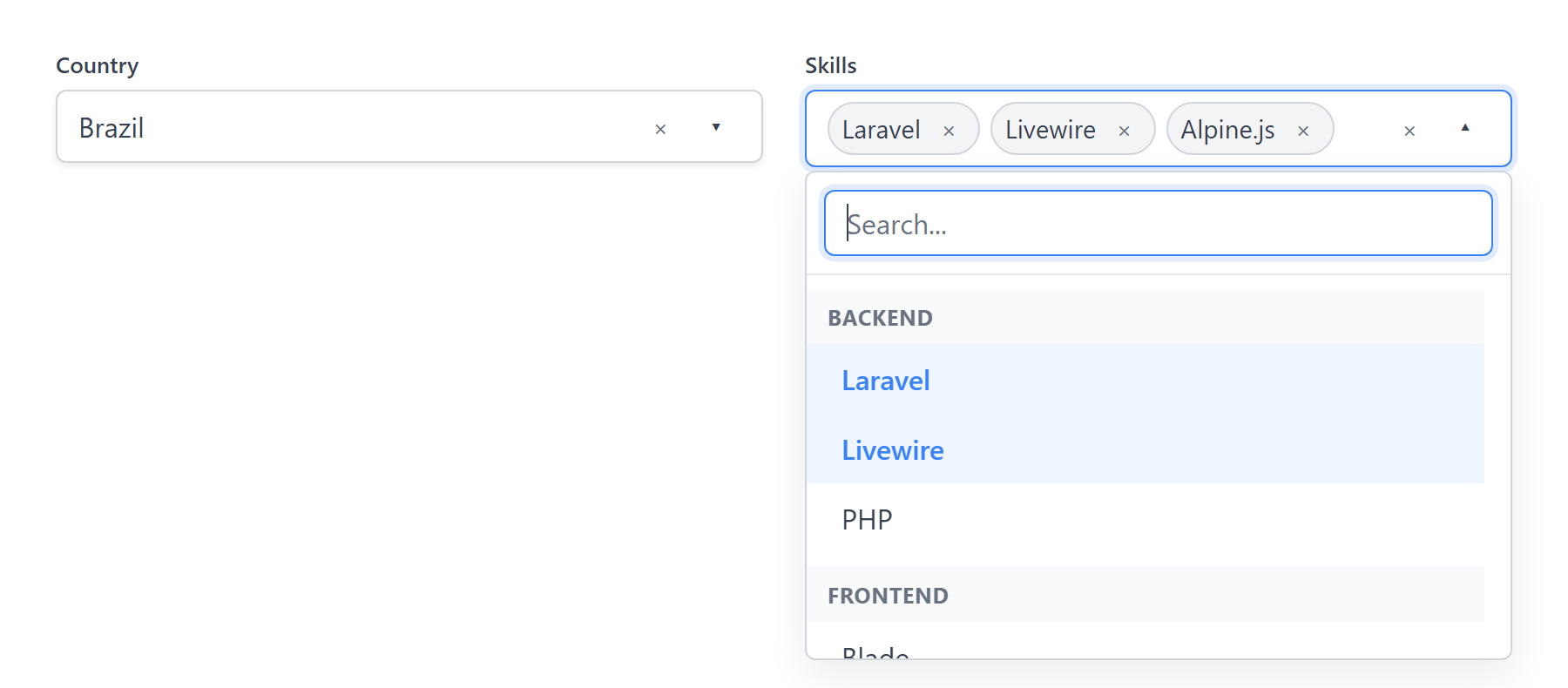
Single, multiple and grouped selects with search, images, remote options and "create new" entries.
ozi-editor
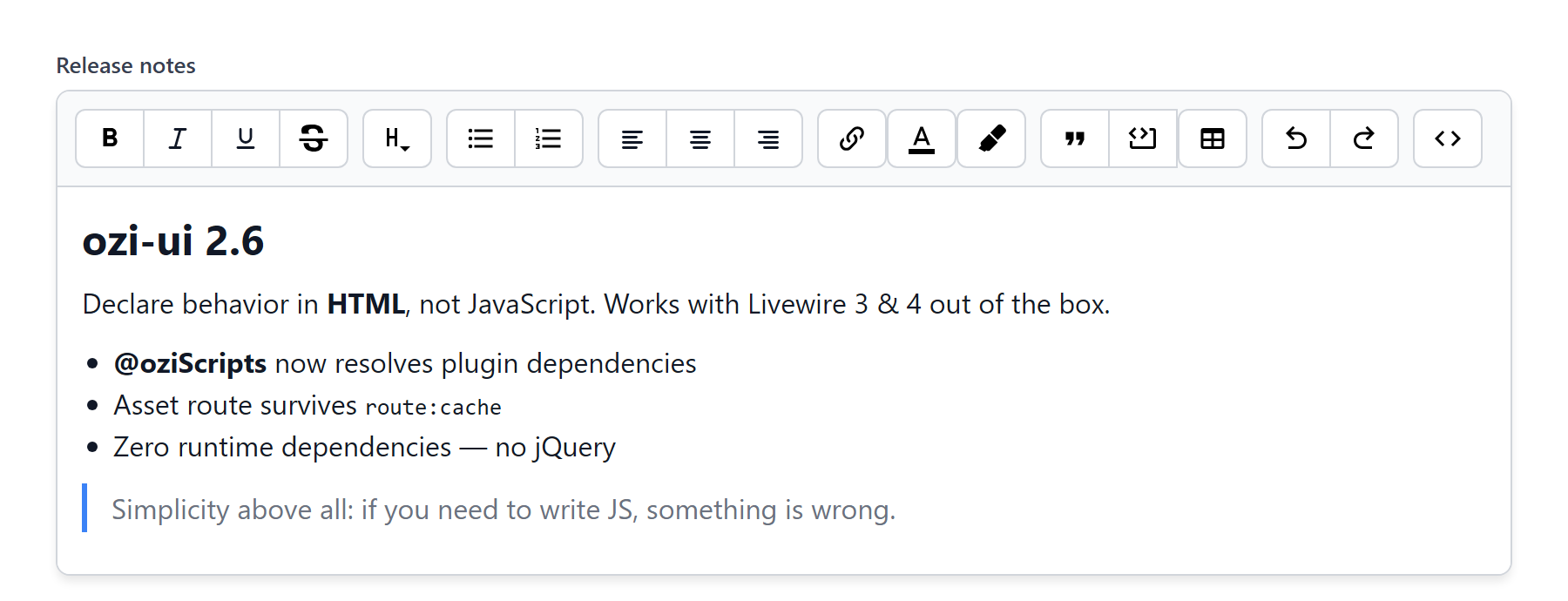
A rich-text (or Markdown) editor with a configurable toolbar: headings, lists, alignment, links, colors, tables, images, source mode, undo/redo. Output is sanitized.
<textarea data-ozi-editor-html="notes"
          data-ozi-editor-tools="[bold,italic,underline], heading, [ul,ol], [link,color], table, source"></textarea>
ozi-validate
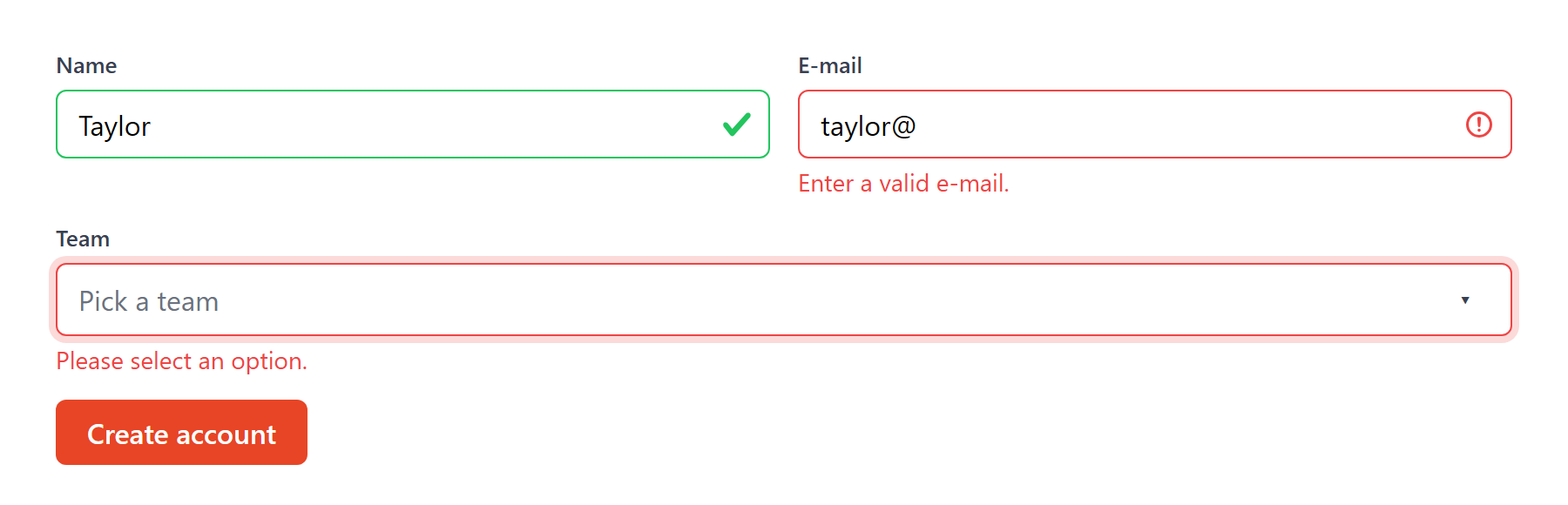
Client-side validation for native fields and ozi components. Put data-ozi-validate on the submit
button to block the submission (click or Enter) while the form is invalid.
<form novalidate>
    <input name="email" type="email" data-ozi-required="true">
    <span class="ozi-feedback"></span>

    <button type="submit" data-ozi-validate>Create account</button>
</form>
ozi-loaddata
AJAX without JavaScript: collect fields, validate, send, and render the response.
<div id="product-form">
    <input name="name" data-ozi-required="true">
</div>

<button data-zld-url="/products"
        data-zld-catch-group-id="product-form"
        data-zld-destiny-id="result"
        data-zld-form-busy="true">
    Save
</button>
<div id="result"></div>
All plugins
Components and behaviors you use directly
| Plugin | What it does |
|---|---|
ozi-select |
Select with search, groups, images, remote options, creatable entries |
ozi-editor |
Rich-text / Markdown editor with a configurable toolbar |
ozi-validate |
Form validation and submit gate |
ozi-loaddata |
Declarative AJAX: collect, validate, send, render |
ozi-autocomplete |
Autocomplete input with remote data |
ozi-check |
Styled checkbox and radio groups |
ozi-search |
Live filtering of page content |
ozi-auth |
Sign-up / password forms: live rule checklist, confirmation, show/hide |
ozi-audio |
Audio recording and playback |
ozi-toggle |
Show/hide and state toggles |
Internal modules (loaded automatically as dependencies): ozi-suggest, ozi-actions,
ozi-password-rules, ozi-editor-sanitize.
Installation details
Blade directives. @oziStyles and @oziScripts accept plugin keys or groups (forms,
auth, livewire, full). With no argument they load everything. Dependencies are resolved for
you: @oziScripts(['editor']) also loads the validator and the sanitizer it needs.
Production. Optionally publish the assets so your web server serves them directly:
php artisan vendor:publish --tag=ozi-ui
Health check. php artisan ozi:check verifies the installation and fails if anything is
missing or out of sync.
Themes. A theme is data, not code: the same JavaScript serves default, bootstrap5 and
tailwind. Link the theme's CSS after @oziStyles and pick it with oziConf():
@oziStyles
<link rel="stylesheet" href="/plugins/ozi-ui/themes/bootstrap5/tokens.css">
<link rel="stylesheet" href="/plugins/ozi-ui/themes/bootstrap5/overrides.css">
<link rel="stylesheet" href="/plugins/ozi-ui/themes/bootstrap5/dark.css">

@oziScripts
<script>oziConf({ theme: 'bootstrap5' });</script>
For a custom theme, copy themes/_template/.
Languages. en, pt-BR and es. The language follows your Laravel locale by default;
oziConf({ lang: 'es' }) overrides it.
Without Blade. ozi.js also works on a plain HTML page: include
<script src="/plugins/ozi-ui/ozi.js"></script> and it loads the plugins you list in
oziConf({ plugins: [...] }).
Requirements
- PHP 8.2+
- Laravel 10, 11, 12 or 13. Laravel 10 and 11 are past their security support; ozi-ui still works on them and is tested on them, but upgrading the framework is recommended.
- Livewire 3 or 4 (optional)
Tested
Every push runs on GitHub Actions:
- PHPUnit (via Orchestra Testbench) on PHP 8.2–8.4 × Laravel 10–13: asset resolution, Blade
directives, the asset route, and
ozi:check - 34 browser acceptance pages in headless Chrome, one or more per plugin
See tests/aceites/README.md to run them locally.
Documentation
Full documentation: oziui.com/en/docs (also in Português and Español).
Background
ozi-ui started in 2012 as a small helper to cut $.ajax boilerplate and grew, project by project,
into a plugin ecosystem. Version 2 (2026) rewrote everything in plain JavaScript and dropped
jQuery. One principle has not changed: if you need to write JavaScript, something is wrong.
License
MIT. © 2012–2026 Thomaz Ozi and oziui.com.