
asignua / filament-relation-manager-tabs

Render Filament 5 relation managers as ordinary tabs of the record form: put RelationManagerTab::make(Manager::class) into the form's Tabs and the edit page has exactly one row of tabs — your form tabs and relation managers side by side — instead of a second row of tabs under the form. Lazy loading
Package info
github.com/asignua/filament-relation-manager-tabs
pkg:composer/asignua/filament-relation-manager-tabs
Requires
- php: ^8.3
- filament/filament: ^5.6
- illuminate/contracts: ^12.0|^13.0
Requires (Dev)
- larastan/larastan: ^3.0
- laravel/pint: ^1.18
- orchestra/testbench: ^10.0|^11.0
- phpunit/phpunit: ^11.5|^12.0
Suggests
None
Provides
None
Conflicts
None
Replaces
None
README

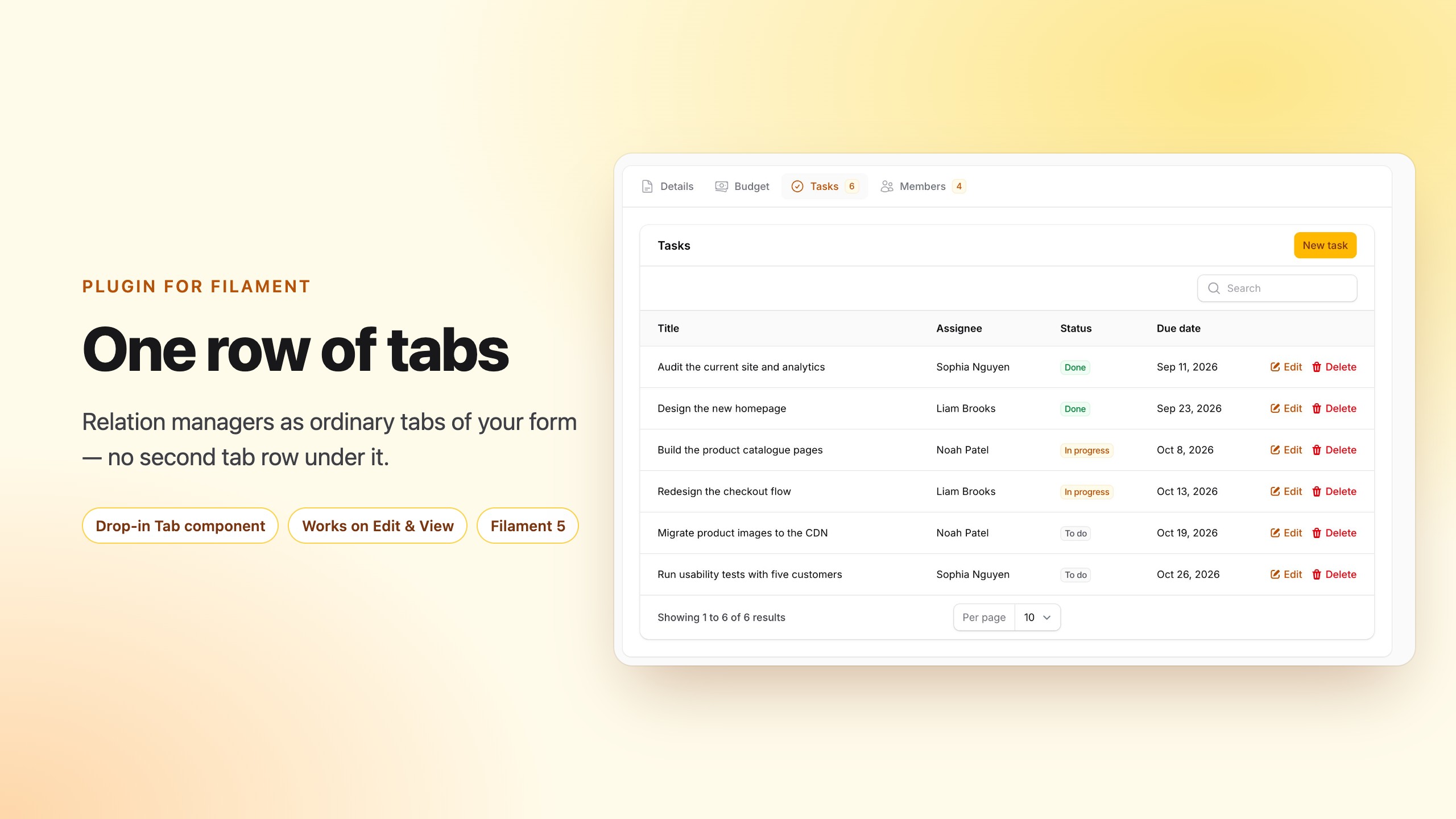
Render a Filament relation manager as an ordinary tab of the record form. The edit page then has exactly one row of tabs: the form's own tabs and your relation managers side by side.
- Screenshots
- Requirements
- Installation
- Usage
- Lazy loading
- Collapsible sections
- Why not
hasCombinedRelationManagerTabsWithContent() - Gotchas
- AI agents
- Testing
Screenshots
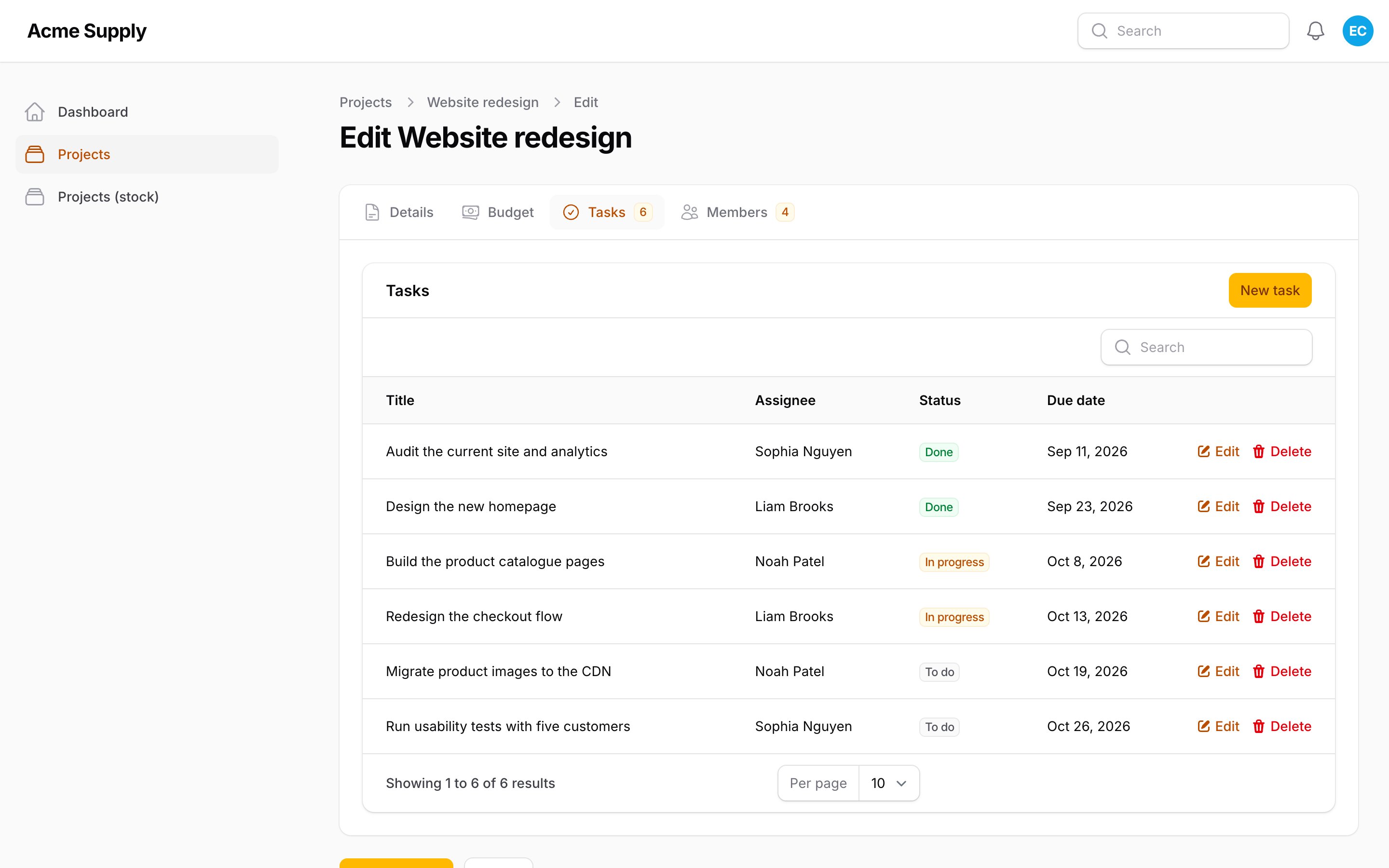
One row of tabs — the form's own tabs and the relation managers side by side, with their badges:
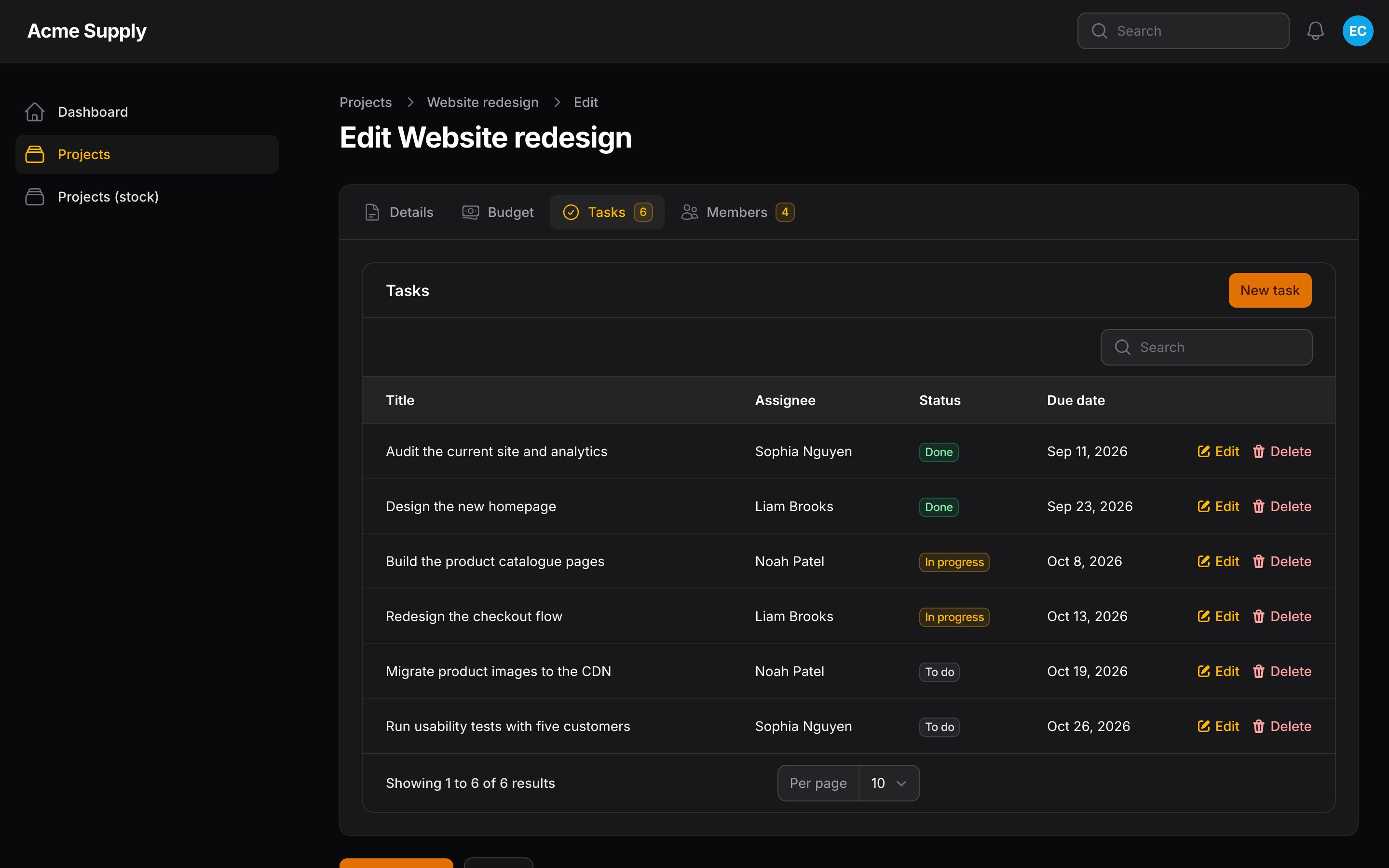
The same page in dark mode:
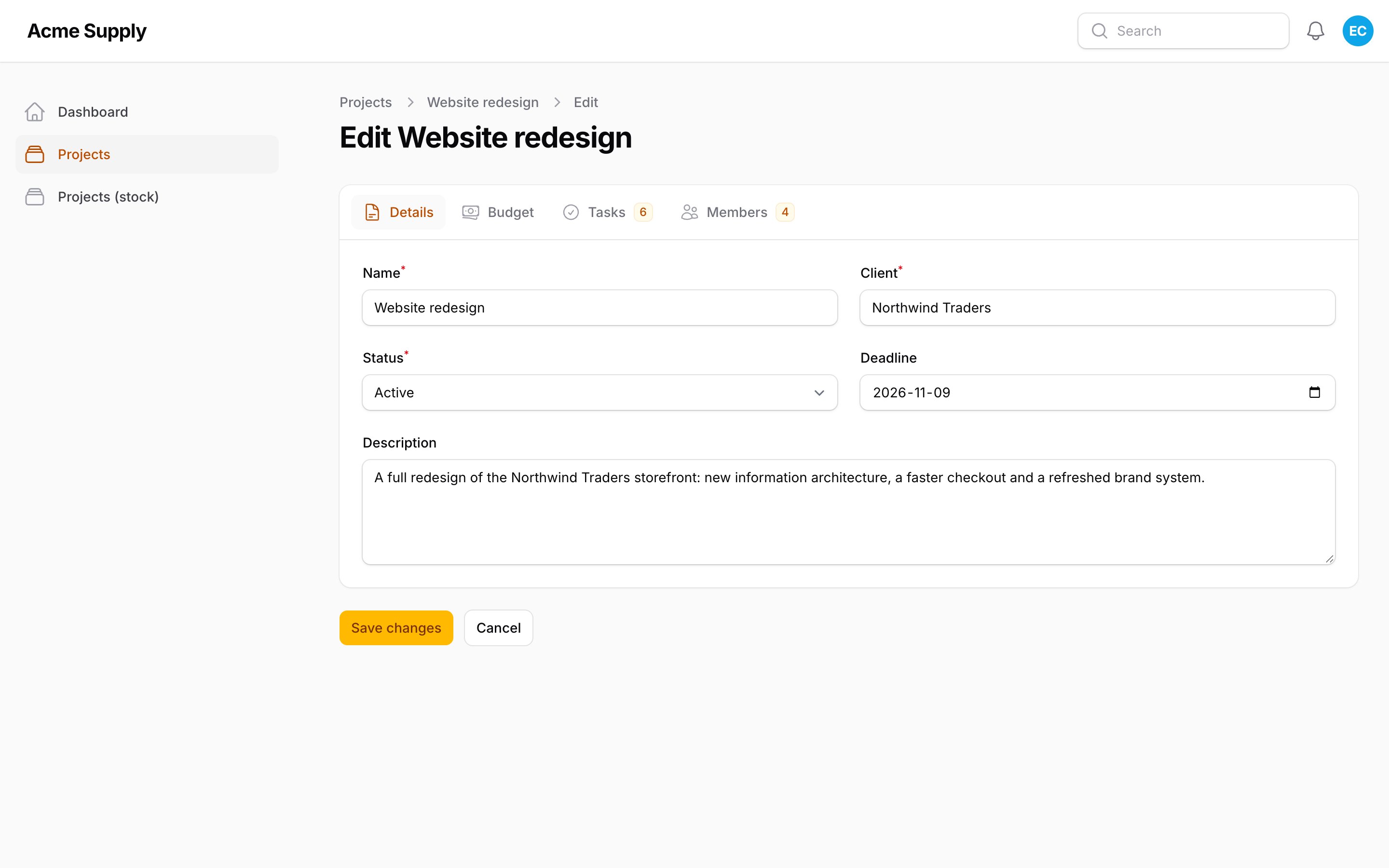
The form tabs work as usual:
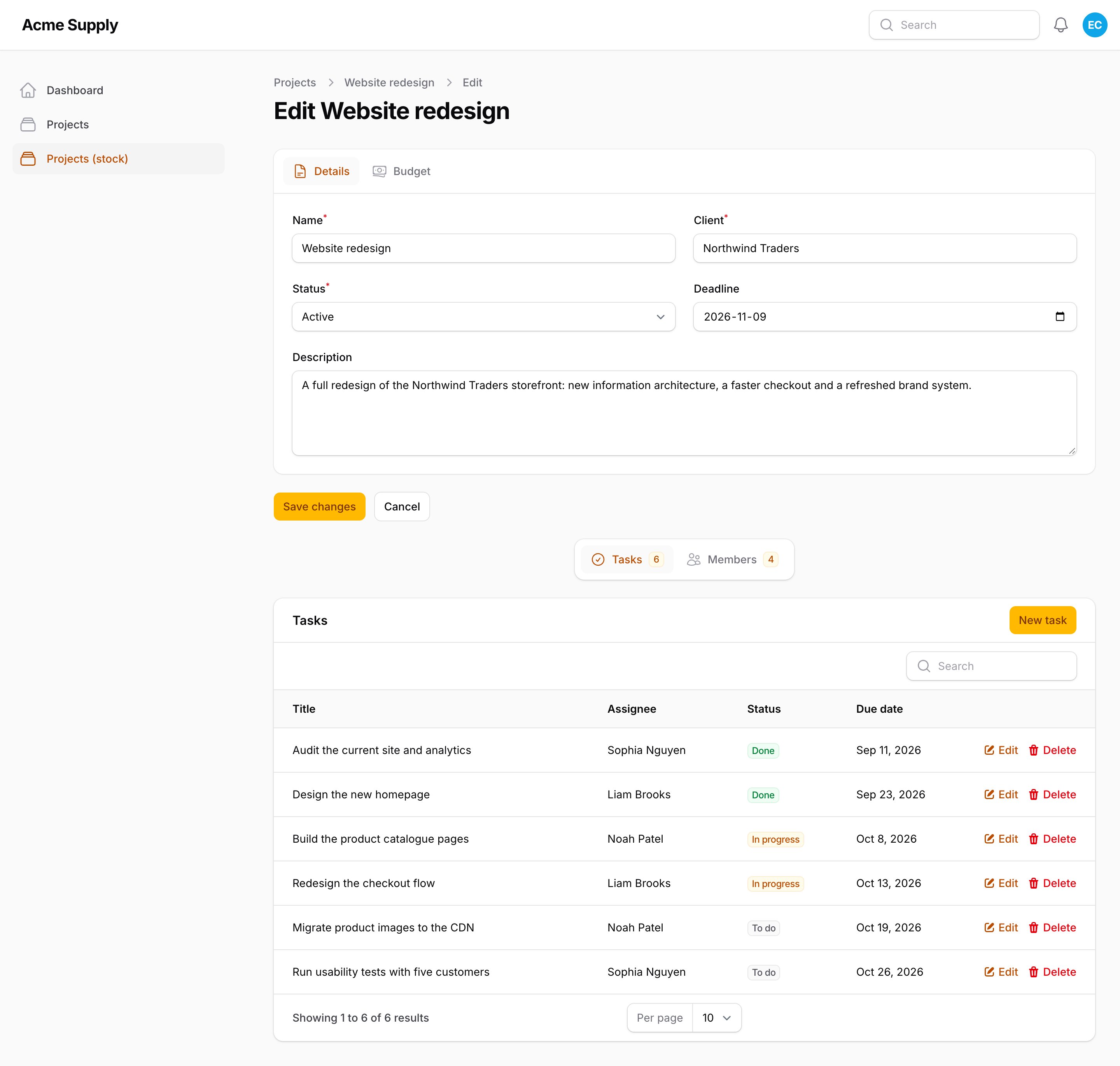
For comparison, stock Filament — the managers get a second row of tabs under the form:
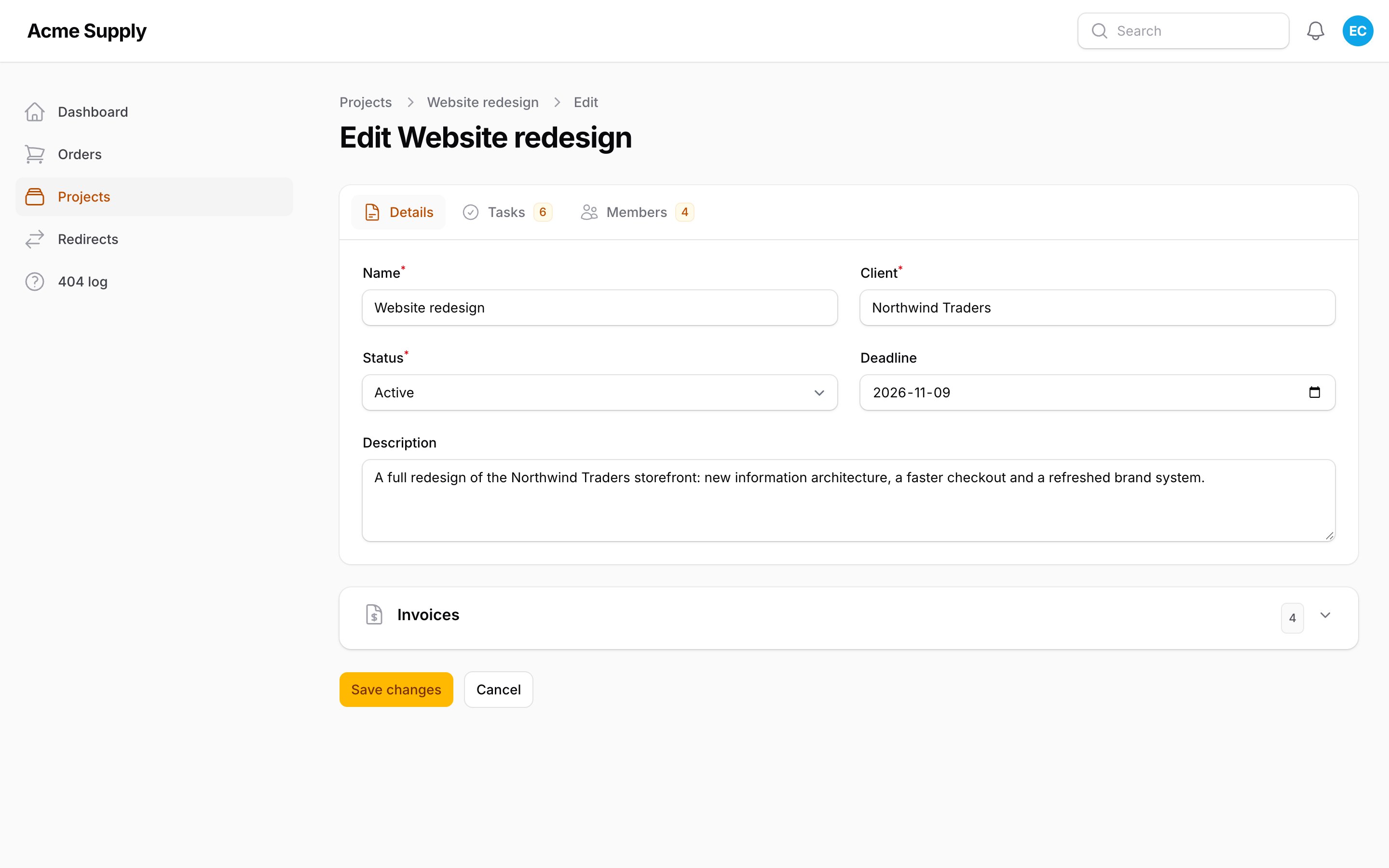
A RelationManagerSection starts collapsed - nothing is loaded:
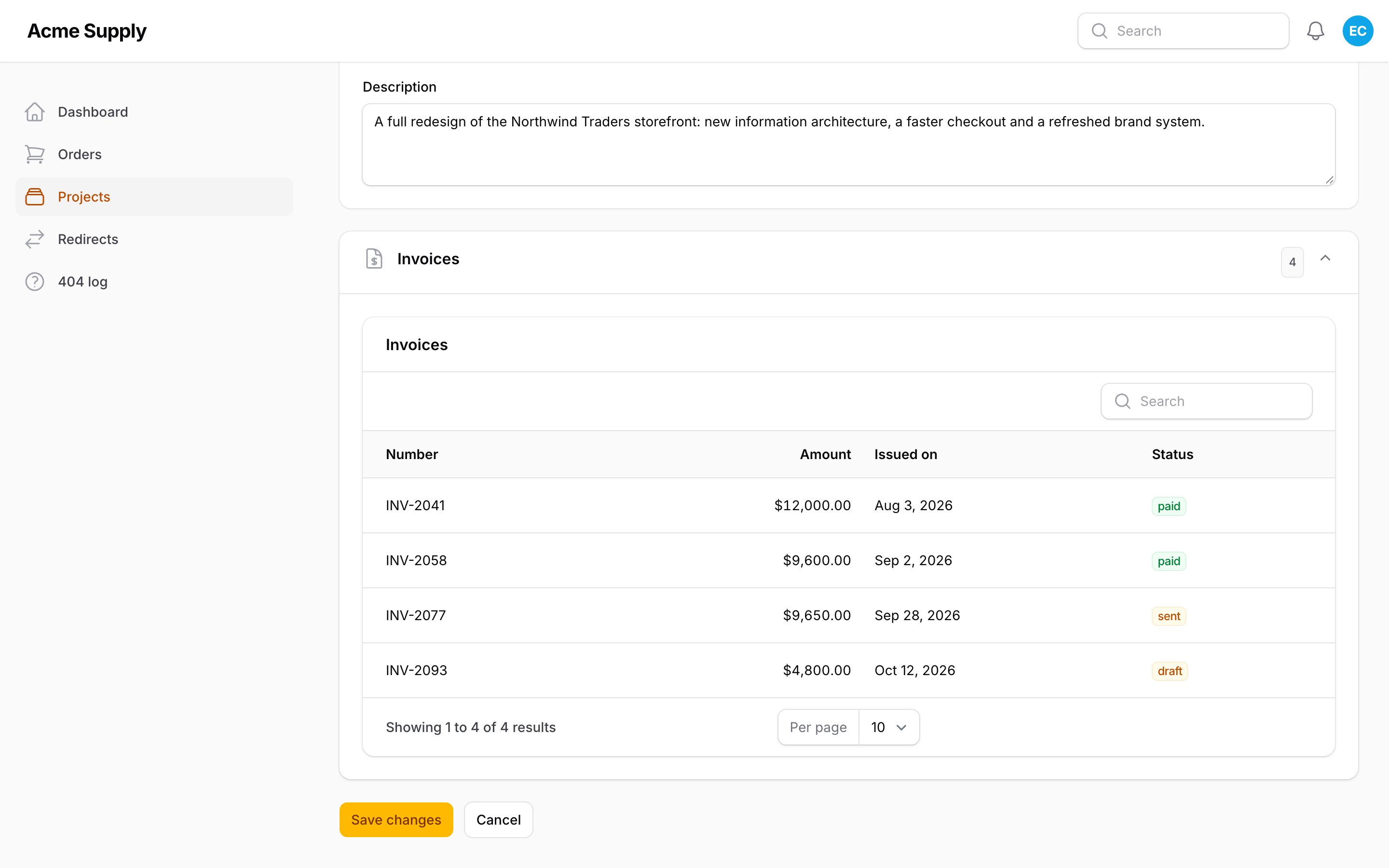
Expanding it mounts the manager on demand:
Requirements
- PHP 8.3+
- Laravel 12 or 13
- Filament 5.6+ (the tab uses
deferBadge()andisBadgeDeferred())
Installation
composer require asignua/filament-relation-manager-tabs
There is no service provider and nothing to register: it is a schema helper, not a panel plugin.
Usage
Put RelationManagerTab::make() into the same Tabs component as the rest of the form, and
return an empty array from getRelations():
use Asignua\FilamentRelationManagerTabs\RelationManagerTab;
use Filament\Forms\Components\TextInput;
use Filament\Resources\Resource;
use Filament\Schemas\Components\Tabs;
use Filament\Schemas\Schema;

class TeamResource extends Resource
{
    public static function form(Schema $schema): Schema
    {
        return $schema->components([
            Tabs::make('Tabs')
                ->persistTabInQueryString()
                ->tabs([
                    Tabs\Tab::make('Details')->schema([
                        TextInput::make('name')->required(),
                    ]),
                    RelationManagerTab::make(PostsRelationManager::class),
                    RelationManagerTab::make(
                        MembersRelationManager::class,
                        label: 'People',
                        icon: 'heroicon-o-users',
                        key: 'people',
                    ),
                ])
                ->columnSpanFull(),
        ]);
    }

    // The managers live in the form's tabs — never return them here as well.
    public static function getRelations(): array
    {
        return [];
    }
}
make() takes the manager class, an optional label (default: the manager's getTitle()), an
optional icon (default: its getIcon()) and an optional tab key. Everything else comes from the
manager, exactly as on a stock relation-manager tab: the icon position (getIconPosition()), the
badge (getBadge(), getBadgeColor(), getBadgeTooltip(), and $isBadgeDeferred) and the
visibility (canViewForRecord()). The manager receives the same data as in the stock block,
including the page's activeLocale when the page uses a locale switcher (spatie-translatable).
To pass properties to the manager, give make() a configuration instead of a class name, as in
stock getRelations():
RelationManagerTab::make(PostsRelationManager::make(['status' => 'draft']));
RelationGroup (several managers under one stock tab) is not supported: give each manager its
own tab. A manager's overridden getTabComponent() is not used either; the tab is built from the
static getters listed above.
It works the same way on View pages: put the tab into the Tabs of the infolist (or of the
form the View page shows).
Several managers at once, with default labels, icons and keys:
Tabs::make('Tabs')->tabs([
    Tabs\Tab::make('Details')->schema([/* ... */]),
    ...RelationManagerTab::many([
        PostsRelationManager::class,
        MembersRelationManager::class,
    ]),
]);
Lazy loading
Filament relation managers are already lazy by default (RelationManager::$isLazy = true):
Livewire renders a placeholder and mounts the manager when it scrolls into view. A tab panel
that is not active and a section that is collapsed are display: none, so they never intersect —
nothing is mounted or queried until the tab is opened / the section expanded. (Older Filament
discussions asking for this predate that default.) The lazy: argument lets you override the
manager per placement:
RelationManagerTab::make(PostsRelationManager::class);               // follow the manager (default)
RelationManagerTab::make(PostsRelationManager::class, lazy: true);   // force lazy, even if $isLazy = false
RelationManagerTab::make(PostsRelationManager::class, lazy: false);  // mount eagerly with the page
RelationManagerTab::many([...], lazy: true);
A lazy manager mounts when its placeholder enters the viewport, so a section expanded below the fold loads when you scroll to it, not at the click.
Note that the tab badge is computed by the parent page, so a getBadge() that runs a query
still runs on the initial render. Set $isBadgeDeferred = true on the manager if that matters: the
tab then renders without the badge and fetches it in a separate request, as a stock tab does. A
section has no such request, so in a section the badge is always computed with the page (once).
Collapsible sections
When tabs are the wrong layout, put the manager in a collapsible Section:
use Asignua\FilamentRelationManagerTabs\RelationManagerSection;

$schema->components([
    Section::make('Details')->schema([/* ... */]),
    RelationManagerSection::make(PostsRelationManager::class),              // collapsed + lazy
    RelationManagerSection::make(
        MembersRelationManager::class,
        label: 'People',
        icon: 'heroicon-o-users',
        collapsed: false,
        lazy: false,
        key: 'people',
    ),
]);
The heading, icon, badge, badge colour and badge tooltip come from the manager like on a tab (a
Section has no icon position, so getIconPosition() does not apply); the section is hidden on Create
and when canViewForRecord() is false. By default it starts collapsed and lazy (the
manager is mounted on first expand). It returns a regular Filament\Schemas\Components\Section,
so ->columnSpanFull(), ->description(), ->persistCollapsed() and so on still work. The
same slug-key and "empty getRelations()" rules apply.
Why not hasCombinedRelationManagerTabsWithContent()
Stock Filament draws the form with its own Tabs, and the related records in a separate block
under it — with two or more managers, a second row of tabs. Filament's built-in
hasCombinedRelationManagerTabsWithContent() does not remove that second level: it wraps the
whole form into one tab, so your form tabs just sink one level down. This helper hangs the
manager into the form's own Tabs, which is the only way to get a single row.
Gotchas
- No tab on the Create page. A relation manager needs an owner record, and on a create page the record does not exist yet. The tab is hidden until it does (the same condition Filament uses to hide managers on create).
- The tab key is a slug, and it must stay one. Filament pastes the key into Alpine as a bare
string in the tab button (
x-on:click="tab = '<key>'") but double-escaped in the panel. A key holding a class name (backslashes) makes the two diverge:\F,\E,\Ubecome JS escape sequences in the button, and the tab opens empty, with no console error. The default key is the slug of the class basename (relation-manager-postsrelationmanager). Pass your ownkey:when you usepersistTabInQueryString(), because the key ends up in the URL. A custom key must not be empty and must not contain a backslash, a quote (',"), a backtick,&,<,>or a control character; such a key throwsInvalidArgumentException. A backslash or an HTML character reference (a<b) opens an empty tab, and Filament silently strips the rest from keys, so the key in the DOM and the URL would not be yours. Spaces,:, non-ASCII letters and the like are fine. - Two managers with the same class basename (
Blog\PostsRelationManagerandShop\PostsRelationManager) get the same default key. On one page, passkey:to at least one of them, or the tabs (or section ids) collide. - Do not also return the manager from
getRelations()(stock Filament renders whatever it returns as a block under the form). A manager left registered there is rendered twice: once as your tab or section and once as the stock block. - The manager sits inside the edit page
<form>. Filament draws the action modal only after the action is mounted (a Livewire DOM patch), so the nested modal form survives. Implicit submission is the catch: Enter in the manager's search field, a filter input or an inline-editable column would submit the outer form and save the record. The plugin wraps the embedded manager in akeydown.enterguard that stops Enter for inputs owned by the outer form only; the manager's own modal forms keep working.hasFormWrapper(): falseon the Edit page remains an alternative.
AI agents
The package ships Laravel Boost guidelines
(resources/boost/guidelines/core.blade.php): with Boost installed, php artisan boost:install
picks them up, so your coding agent knows the rules above.
Testing
composer test      # PHPUnit (Orchestra Testbench)
composer analyse   # Larastan
composer format    # Pint
Changelog
See CHANGELOG.md.
License
MIT. See LICENSE.md.