
tomatophp / filament-api

Generate APIs from your filament resource using single line of code
Fund package maintenance!
Requires
- php: ^8.2
- calebporzio/sushi: ^2.5
- filament/filament: ^5.0
Requires (Dev)
- larastan/larastan: ^3.0
- laravel/pint: ^1.24
- orchestra/testbench: ^10.0|^11.0
- pestphp/pest: ^4.0|^5.0
- pestphp/pest-plugin-laravel: ^4.0|^5.0
- pestphp/pest-plugin-livewire: ^4.0|^5.0
Suggests
None
Provides
None
Conflicts
None
Replaces
None
This package is auto-updated.
Last update: 2026-10-15 17:30:28 UTC
README
Resource API Generator
Generate JSON APIs from your Filament resources with a single line of code.
Version Compatibility
| Plugin | Filament | Laravel | PHP |
|---|---|---|---|
| 1.x | 3.x | 10.x / 11.x | 8.1+ |
| 5.x | 5.x | 12.x / 13.x | 8.2+ |
Installation
The APIs list page keeps the generated endpoints in an in-memory SQLite table, so the pdo_sqlite PHP extension is required.
composer require tomatophp/filament-api
php artisan filament-api:install
To list the generated endpoints in your panel, register the plugin in /app/Providers/Filament/AdminPanelProvider.php:
->plugin(\TomatoPHP\FilamentApi\FilamentAPIPlugin::make())
The endpoints use the auth:sanctum middleware by default. Install Laravel Sanctum (php artisan install:api) or change default_middleware in config/filament-api.php.
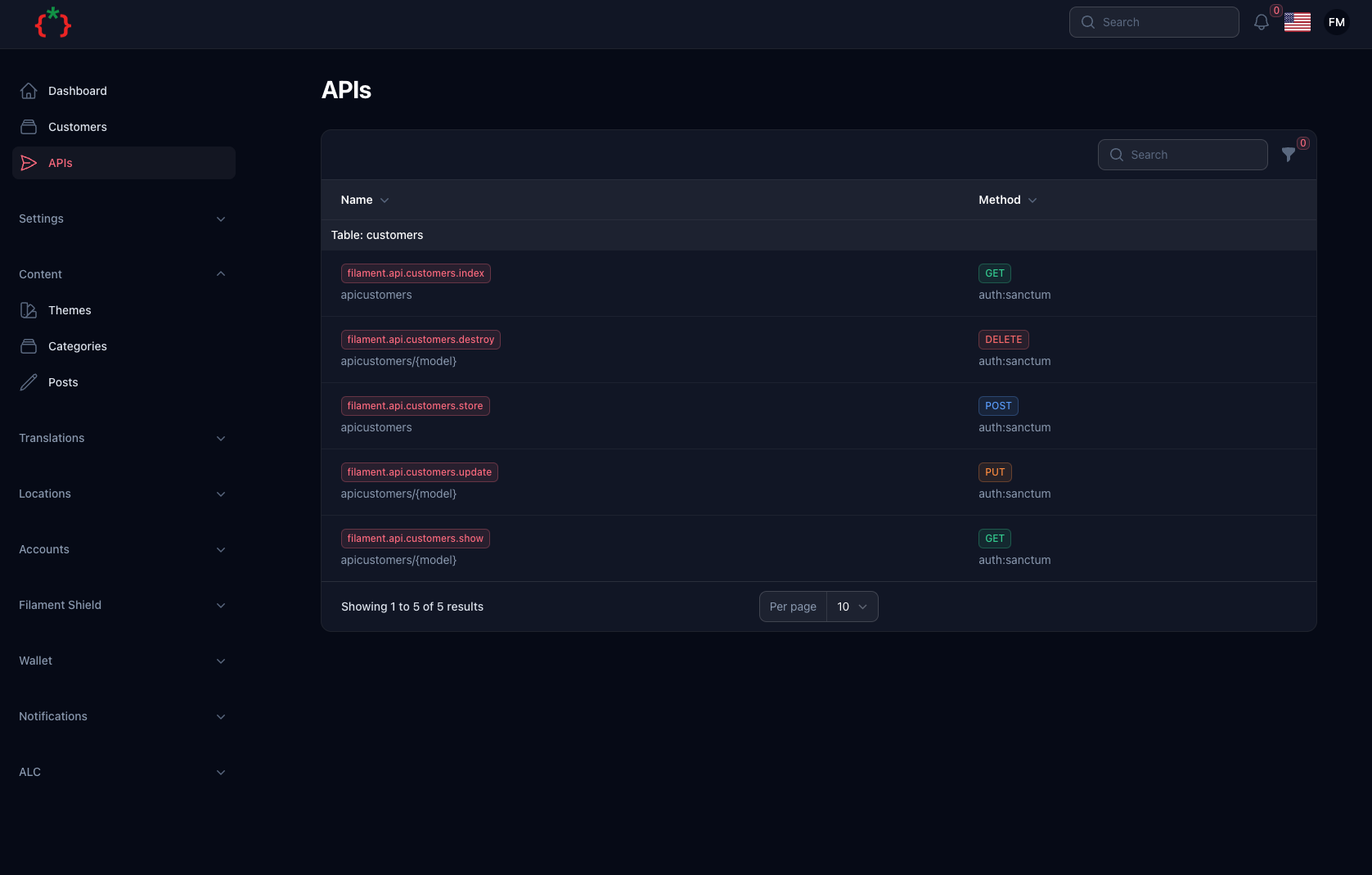
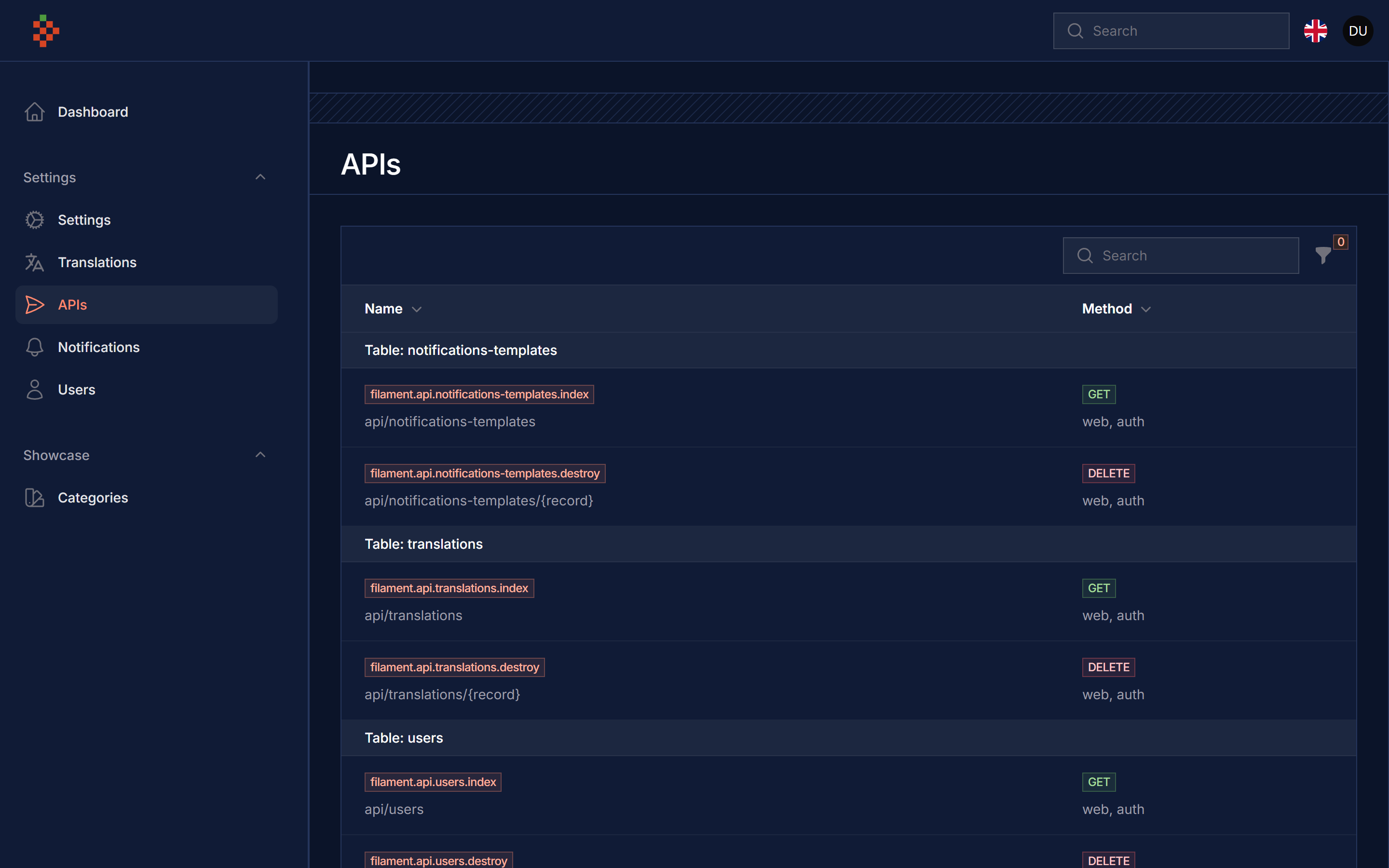
Screenshots
Usage
Add the trait to your resource pages:
use Filament\Resources\Pages\ListRecords;
use TomatoPHP\FilamentApi\Traits\InteractWithAPI;

class ListPosts extends ListRecords
{
    use InteractWithAPI;
}
That's it, the API is available under /api/{slug}. Each page type adds its endpoints:
| Page | Endpoints |
|---|---|
ListRecords |
GET /api/{slug} (list, ?search= and ?page=), DELETE /api/{slug}/{id} |
ManageRecords |
all five endpoints |
CreateRecord |
POST /api/{slug} |
EditRecord |
PUT /api/{slug}/{id} |
ViewRecord |
GET /api/{slug}/{id} |
- The list returns the visible columns of the resource table, searches its searchable columns and uses its default sort.
Relationship columns such as
author.nameare eager loaded and searchable. - Create and update validate the request with the rules of every field of the resource form (fields inside sections, tabs and grids included) and save only the form fields.
- Queries go through the resource
getEloquentQuery(), so scopes, soft deletes and tenancy filters apply. - When the model has a policy, the
viewAny,view,create,updateanddeleteabilities are checked for the API user. - The routes point at a controller, so
php artisan route:cacheworks.
Responses look like {"status": "success", "message": "OK", "data": ...}; errors return {"status": "error", "message": "..."}
with the status code (404, 403, and 422 with an errors object for validation).
Customize your API
Override these methods on the page:
// Return a JSON resource from the list, show, store and update endpoints
public static function getFilamentAPIResource(): ?string
{
    return PostResource::class;
}

// The middleware of the endpoints
public static function getFilamentAPIMiddleware(): array
{
    return ['auth:sanctum'];
}

// The endpoint slug, defaults to the resource slug
public static function getFilamentAPISlug(): ?string
{
    return 'articles';
}

// The form used to validate and save the store and update endpoints
public static function getFilamentAPIForm(Schema $schema): Schema
{
    return static::getResource()::form($schema);
}

// The table used to shape the list endpoint
public static function getFilamentAPITable(Table $table): Table
{
    return static::getResource()::table($table);
}
Publish Assets
php artisan vendor:publish --tag="filament-api-config"
Testing
composer test
Other Filament Packages
Checkout our Awesome TomatoPHP