
jongi-theautodidact / ntoshisoft-framework

NtoshiSoft Framework - Lightweight PHP MVC framework for rapid business application development. Built for small to medium-sized business applications, featuring a CLI tool, modular architecture, and user-centric identity model.
Package info
github.com/Jongi-TheAutodidact/ntoshisoft-framework
Type:project
pkg:composer/jongi-theautodidact/ntoshisoft-framework
Requires
- php: >=8.0
- dompdf/dompdf: ^3.1.6
- phpmailer/phpmailer: ^6.9
Requires (Dev)
None
Suggests
None
Provides
None
Conflicts
None
Replaces
None
README

NtoshiSoft Framework
Lightweight PHP MVC Framework for Rapid Business Application Development
Built for small to medium-sized businesses, startups, and solo developers who want to ship functional applications fast — without the overhead of enterprise frameworks.
Getting Started • CLI Tool • Documentation • Contributing
 |
 |
 |
 |
Features
- Lightweight MVC — Clean separation of concerns with Models, Views, and Controllers
- User-Centric Identity — Everyone registers as a
usersfirst; role-specific profiles (Employee, Client, etc.) link back viauser_id - CLI Generator (
jongi) — Scaffold controllers, models, migrations from the terminal - Migration System — Version-controlled database schema changes
- Built-in Auth — Session management, CSRF protection, password hashing, role-based access
- Mailer Integration — SMTP email via PHPMailer (password resets, notifications)
- Payment Gateway — Extensible payment processing (PayFast ready)
- Image Handler — Upload, resize, and manage images
- Validator — Form input validation with error feedback
- Logger — File-based logging with rotating logs
- Environment Config —
.envfile management viaEnvLoader/EnvWriter - Installation Wizard — 6-step web-based setup for first-time deployment
Requirements
| Requirement | Minimum |
|---|---|
| PHP | 8.0 or higher |
| PDO Extension | pdo_mysql |
| GD Library | Image processing |
| cURL | HTTP requests |
| Fileinfo | MIME type detection |
| mbstring | Multi-byte string handling |
| JSON | Data serialization |
| MySQL | 5.7+ or MariaDB 10.3+ |
| Composer | Dependency management |
| Web Server | Apache (mod_rewrite) or Nginx |
Getting Started
Option 1: Install via Composer (Recommended)
composer create-project jongi-theautodidact/ntoshisoft-framework my-app
cd my-app
Option 2: Clone from GitHub
git clone https://github.com/Jongi-TheAutodidact/ntoshisoft-framework.git
cd ntoshisoft-framework
composer install
Or download the ZIP, extract, and run composer install.
Post-Installation: Running the Setup Wizard
After installation, the framework guides you through a 6-step web-based wizard to configure your application.
1. Live Server Prerequisite
Important: On a live server, before running the install wizard, you must rename
.htaccess-bkpto.htaccessin the project root. Without this, the browser will display a blank page because Apache URL rewriting will not be active.
mv .htaccess-bkp .htaccess
This step is not required on localhost (XAMPP) since the app is accessed directly via the public/ directory.
2. Copy the Environment File
cp .env.example .env
3. Open the Installer in Your Browser
Navigate to the appropriate URL for your environment:
| Environment | URL |
|---|---|
| Localhost (XAMPP) | http://localhost/{project-directory}/public |
| Live Server | https://your-domain.com |
Note: The app is served via Apache (XAMPP or production). Do not use
php jongi serveorphp jongi spinit— the framework is designed to run through a proper web server.
You'll be redirected to the Installation Wizard (install.php).
4. Complete the 6-Step Wizard
The wizard will walk you through:
| Step | What You'll Configure |
|---|---|
| 1. Welcome & Requirements | Server checks (PHP version, extensions, permissions) |
| 2. Database | MySQL host, database name, credentials |
| 3. Tables | Creates users and settings tables |
| 4. Admin Account | Your super-admin login credentials |
| 5. Site Settings | App name, logo upload |
| 6. Mail & Finalize | SMTP settings (optional — skip to do later) |
Once complete, the .env file is written automatically and you're redirected to your application.
5. Log In
Navigate to your app URL and log in using the admin credentials you created during setup.
What's Included Out of the Box
The installation wizard creates only two default tables:
| Table | Purpose |
|---|---|
users |
Admin and user accounts |
settings |
Application configuration (site name, colors, etc.) |
These are the minimum tables needed for the framework to function (authentication and basic settings).
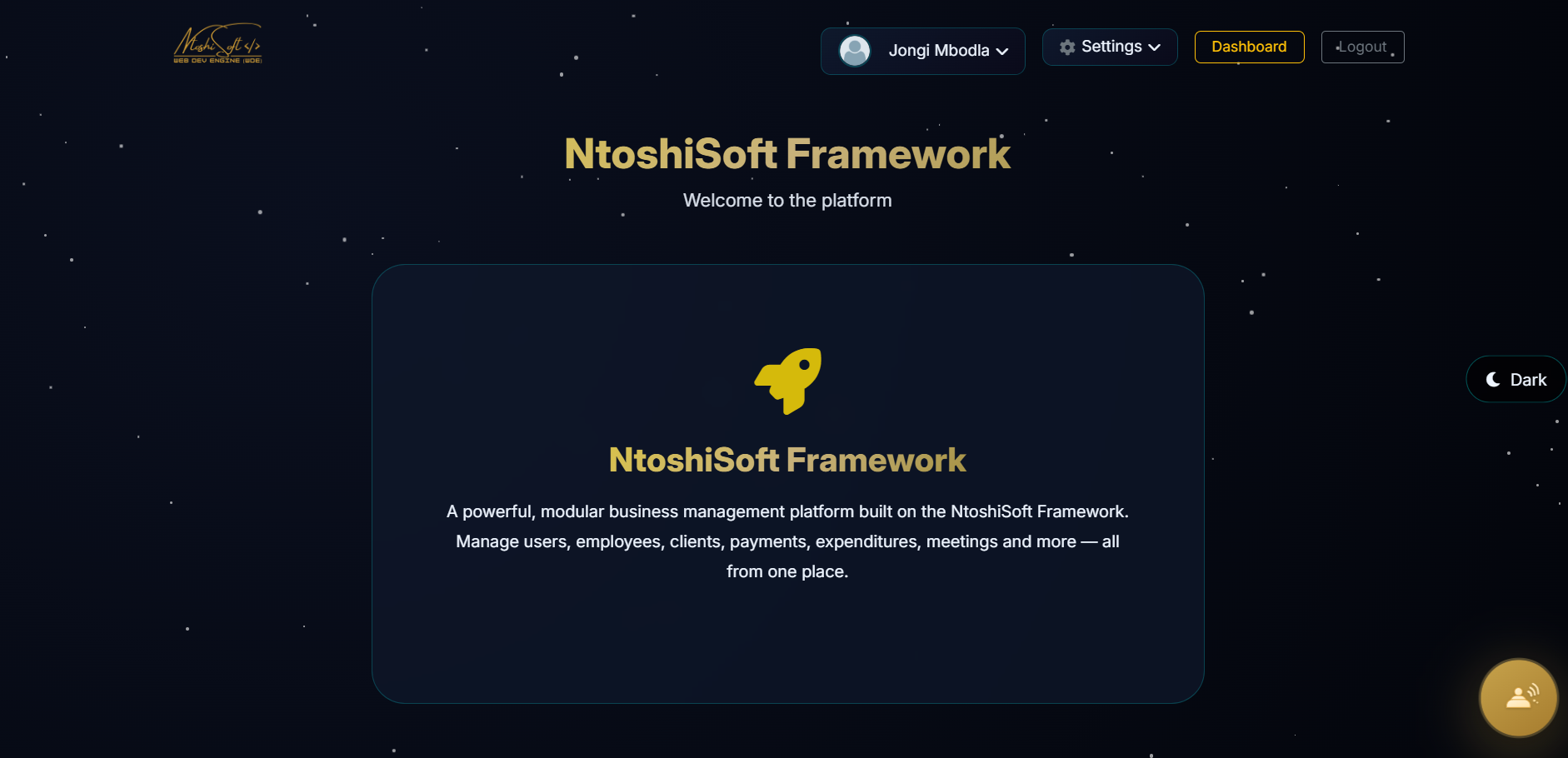
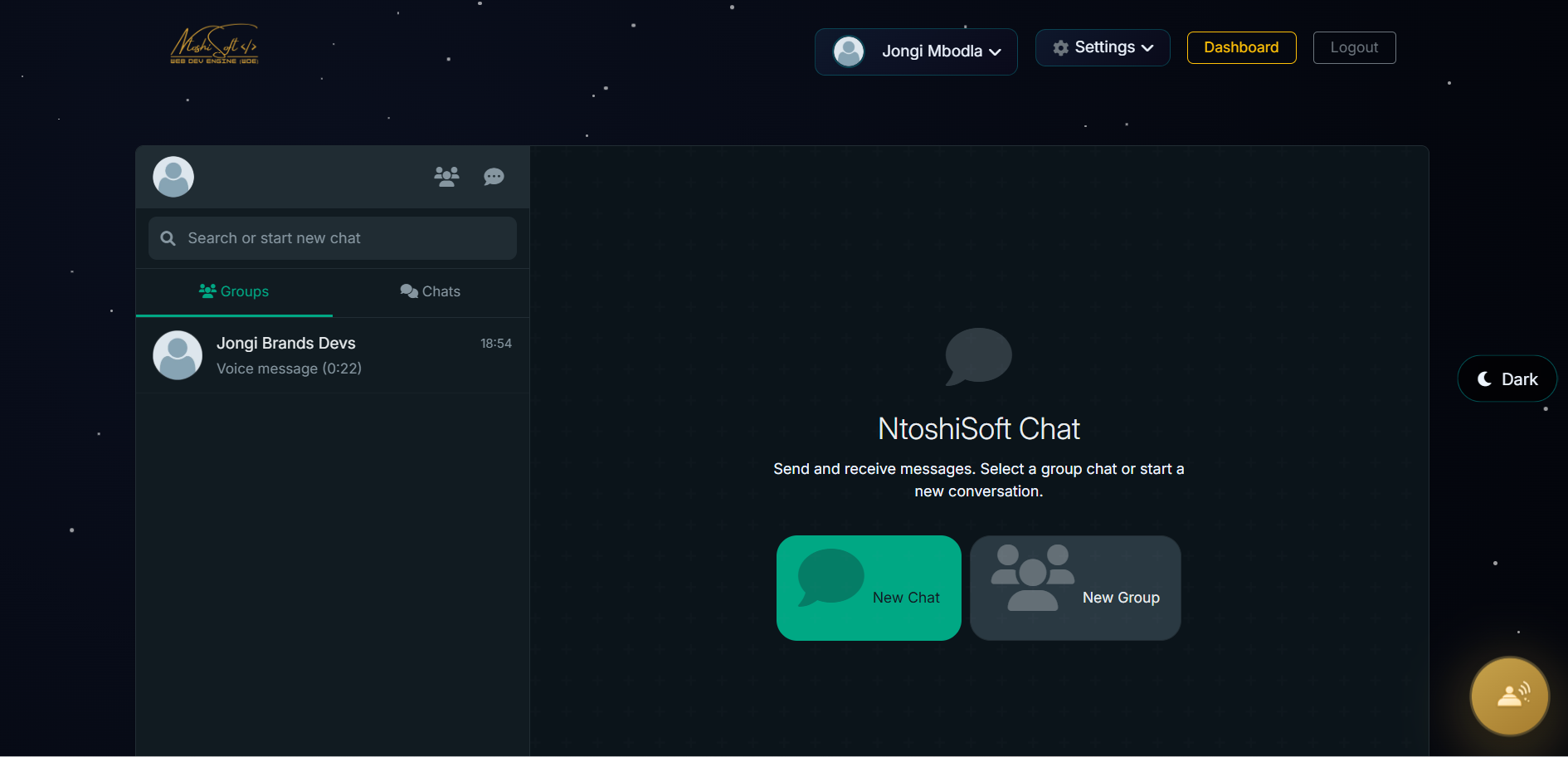
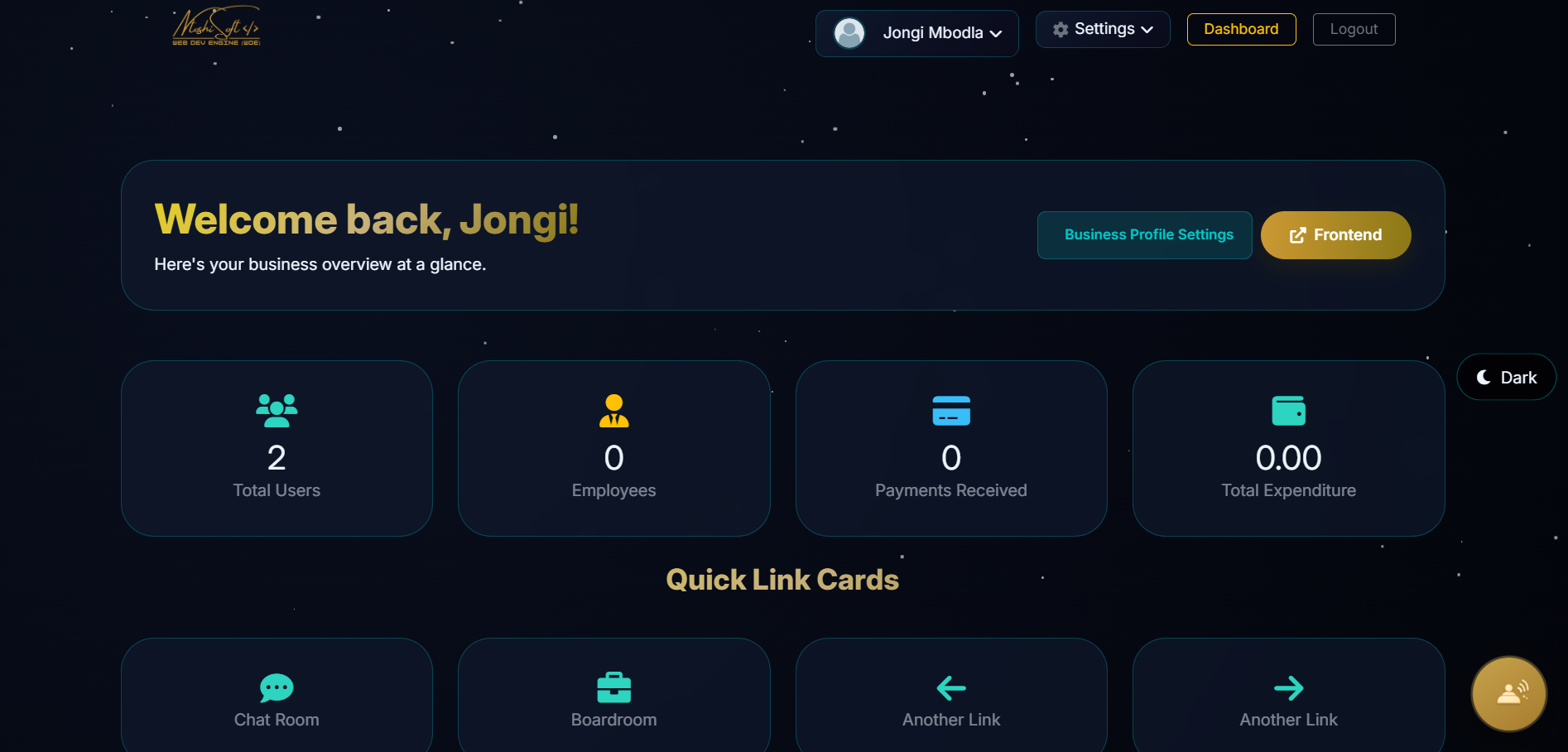
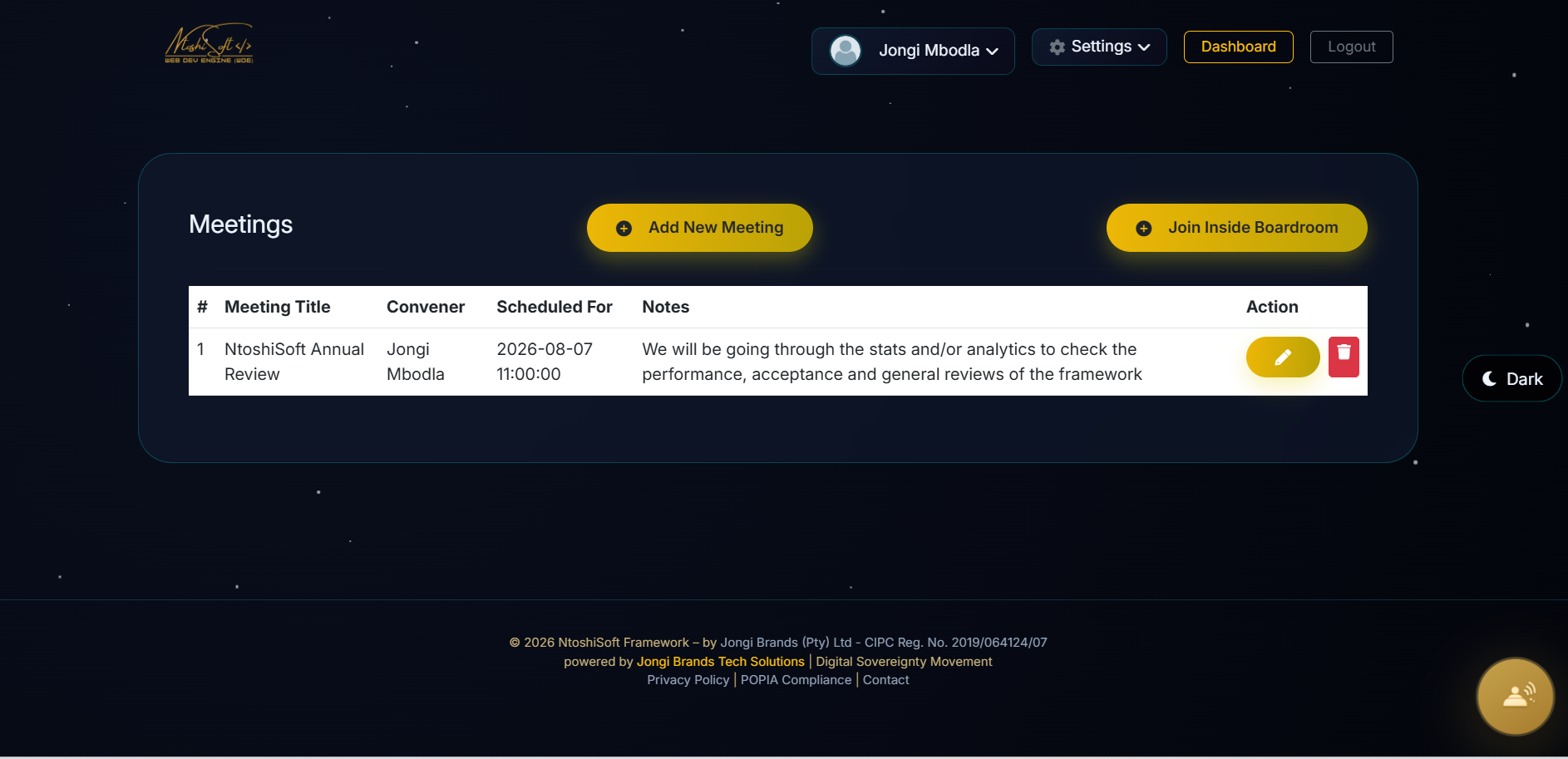
Important: After logging in, you'll see the full dashboard with navigation links to features like Chatroom, Payments, Employees, etc. These are generic modules — clicking them without their database tables will throw errors. To fully explore the framework, migrate all shipped example migrations using the cli command:
php jongi migrate:allThis creates the remaining tables for the bundled generic modules. You can add, remove, or modify any of these later to suit your project.
Ships With — But Not Auto-Migrated
The framework also includes example migrations, models, controllers, and CRUD views in the codebase. These are provided as reference implementations — ready-made examples you can study, adapt, or use as a starting point for your own project.
- Browse
app/migrations/,app/models/,app/controllers/, andapp/views/to see what's available.- Pick only the ones relevant to your project.
- Create your own migrations, models, and controllers as your project dictates.
This keeps your database lean and your application tailored to your specific needs.
Web Server Configuration
Apache (with mod_rewrite)
The framework ships with a .htaccess file inside public/ that handles URL rewriting. No additional configuration needed if .htaccess is enabled.
For a cleaner setup (optional), move the rewrite rules to the root:
<IfModule mod_rewrite.c>
    RewriteEngine On
    RewriteRule ^(.*)$ public/$1 [L]
</IfModule>
Nginx
server {
    listen 80;
    server_name my-app.local;
    root /path/to/my-app/public;

    index index.php;

    location / {
        try_files $uri $uri/ /index.php?url=$uri&$args;
    }

    location ~ \.php$ {
        fastcgi_pass unix:/var/run/php/php8.2-fpm.sock;
        fastcgi_param SCRIPT_FILENAME $document_root$fastcgi_script_name;
        include fastcgi_params;
    }
}
CLI Tool (jongi)
The framework includes a command-line scaffolding tool to accelerate development.
php jongi help
Available Commands
Scaffolding
| Command | Description |
|---|---|
php jongi make:controller <name> |
Generate a new controller |
php jongi make:model <name> |
Generate a new model |
php jongi make:migration <name> |
Generate a new migration file |
php jongi list:migrations |
List all migration files |
Scaffolding Examples
# Create a controller
php jongi make:controller Product

# Create a model (table name auto-pluralized: products)
php jongi make:model Product

# Create a migration
php jongi make:migration create_products_table
Directory Structure
ntoshisoft-framework/
├── app/
│   ├── config/          # Route definitions
│   ├── controllers/     # Application controllers
│   ├── core/            # Framework engine (Database, Model, Router, etc.)
│   ├── jongi/           # CLI tool classes
│   ├── middleware/       # Auth, role, rate-limit middleware
│   ├── migrations/       # Database migration files
│   └── models/          # Data models
│   └── views/           # Presentation templates (.ntoshi.php)
├── logs/                # Application logs
├── public/              # Web root (index.php entry point)
│   └── assets/          # CSS, JS, images, uploads
├── vendor/              # Composer dependencies
├── .env                 # Environment configuration (gitignored)
├── .gitignore
├── composer.json
├── index.php            # Install check & redirect to public/
├── install.php          # Setup wizard
├── jongi                # CLI entry point
└── README.md
Key Framework Files
| File | Purpose |
|---|---|
public/index.php |
Application entry point — bootstraps routing |
app/core/init.php |
Loads Composer autoloader (delegates to vendor/autoload.php) |
app/core/config.php |
Defines constants from .env (DB, app, mail, security settings) |
app/core/functions.php |
Global helper functions |
app/core/Database.php |
PDO database wrapper (queries, transactions, error handling) |
app/core/Model.php |
Base trait for all models (CRUD, query building, pagination) |
app/core/Controller.php |
Base trait — view rendering, data passing |
app/core/Router.php |
URL dispatcher — matches routes to controllers |
app/core/Middleware.php |
Base middleware class |
app/config/routes.php |
Define your application routes here |
Configuration
The .env file is created automatically during the installation wizard. Key variables:
# Database
DB_HOST=localhost
DB_NAME=my_app_db
DB_USER=root
DB_PASS=""

# Application
APP_NAME="My Application"
ROOT="http://localhost/ntoshisoft-framework/public"
APP_ENV=production
DEBUG=false

# Mail (optional)
MAIL_HOST=smtp.gmail.com
MAIL_USERNAME=your@email.com
MAIL_PASSWORD="your-app-password"

# Security
SESSION_LIFETIME=120
CSRF_TOKEN_LENGTH=32
Note: On a live server,
ROOTwill be set tohttps://your-domain.com(without/public). On localhost (XAMPP), it will behttp://localhost/{project-directory}/public.
Security: The
.envfile is excluded from Git via.gitignore. Never commit it to version control.
Built With
- PHPMailer — Email sending
- Dompdf — PDF generation
- Bootstrap 5 — Frontend UI (included in assets)
- Bootstrap Icons — Icon library
License
This project is licensed under the GNU General Public License v3.0 — see the LICENSE for details.
Built with ❤️ by Jongi MbodlaNtoshiSoft Framework — Making business applications accessible to everyone.